
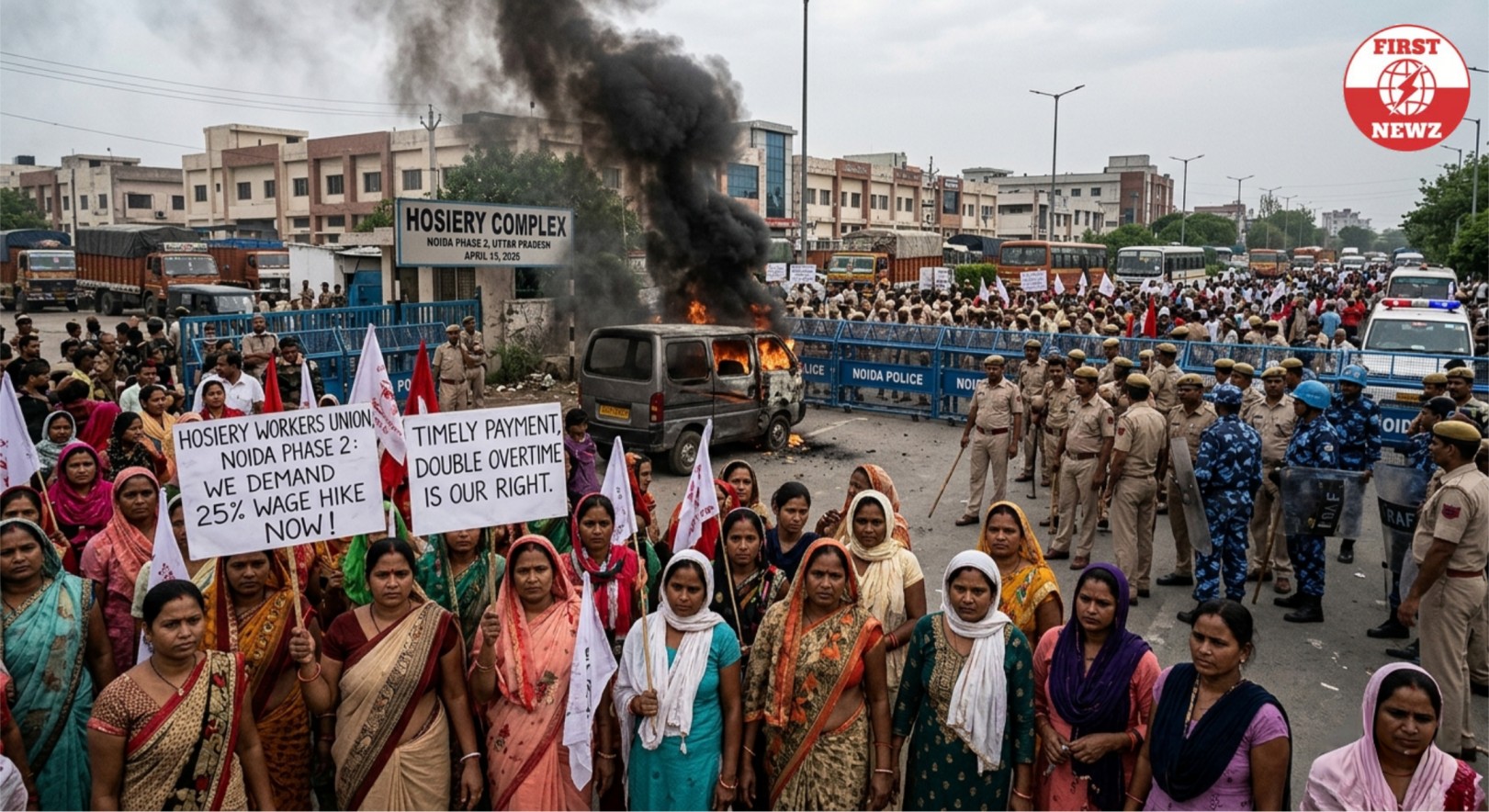
The Noida protest on April 13, 2026, has brought the industrial hub of Uttar Pradesh to a standstill. Thousands of factory workers, mainly from the Hosiery Complex in Noida Phase 2 and sectors 59-62, took to the streets demanding a significant salary hike and better working conditions. What began as a peaceful demonstration days earlier turned violent, with reports of vehicles being torched, stones pelted, and property vandalised, leading to massive traffic chaos across Noida, Greater Noida, and Delhi-NCR borders.
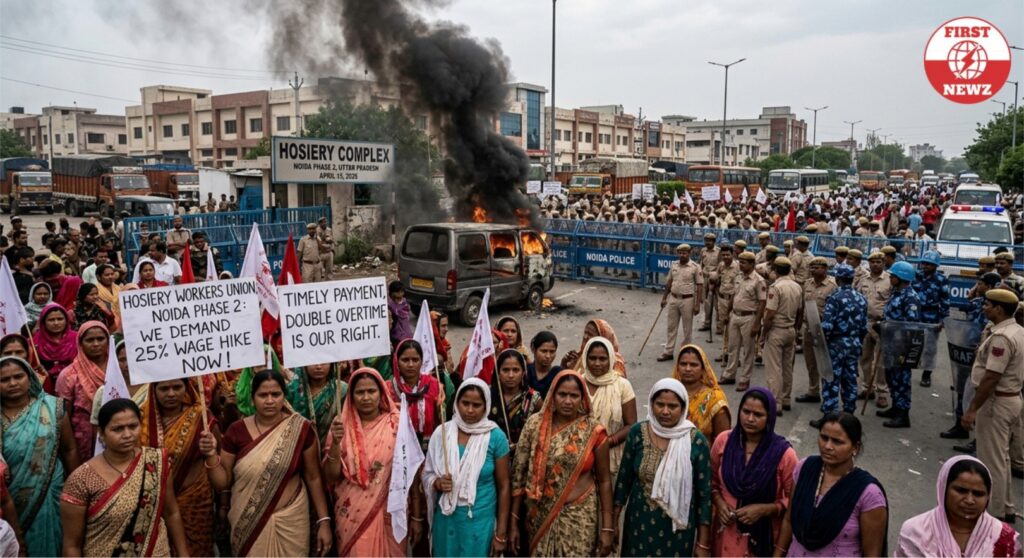
This Noida protest has spotlighted deep-rooted issues of wage disparity in the NCR region, especially after Haryana’s recent minimum wage revision. As of the latest updates on April 13 evening, police have deployed heavy forces, traffic is gradually normalising, and the Uttar Pradesh administration has formed a high-level committee to address the grievances.
What Sparked the Noida Protest?
The unrest traces back to early April 2026 when contract workers at the Honda Motorcycle and Scooter India plant in Gurugram’s IMT Manesar demanded better pay. The movement quickly spread after the Haryana government announced a 35% hike in minimum wages effective April 1, 2026, raising monthly pay from around ₹14,000–₹15,000 to ₹15,220–₹19,425 depending on skill level.
Noida workers, many employed in garment export units, textile, and electronics factories, alleged they were being paid significantly less — approximately ₹13,000 per month — despite doing similar work for the same companies operating across state borders. The protest gained momentum in Noida’s industrial areas starting April 10-11 and escalated sharply on April 13.
Workers claimed factories were not implementing timely wage revisions, overtime rules, or basic labour welfare measures. Political leaders like Samajwadi Party chief Akhilesh Yadav and Uttar Pradesh Congress chief Ajay Rai blamed rising inflation, unemployment, and alleged government inaction for the flare-up.
Key Demands of the Noida Factory Workers
Protesters put forward a clear list of demands focused on fair wages and dignity at work:
- Salary revision to ₹18,000–₹20,000 per month to match Haryana levels and rising living costs (food, rent, fuel).
- Mandatory weekly off and strict 8-hour shifts (no forced 10-12 hour days).
- Double pay for overtime as per labour laws, with no pressure to work extra hours.
- Timely salary disbursement by the 10th of every month along with proper salary slips.
- Annual bonus payment by November 30.
- Formation of Internal Complaints Committee for sexual harassment and a grievance redressal cell.
- Medical cover and other basic workplace facilities.
One protester, Rajeev Ansari, told reporters at the site: “Employees are demanding monthly wages in the range of Rs 18,000-Rs 20,000… We are not seeking overtime but a proper hike.”
Timeline of the Noida Protest
- April 3-6, 2026: Sparked in Manesar, Gurugram; spreads to multiple companies.
- April 10-12, 2026: Peaceful sit-ins begin in Noida Phase 2 Hosiery Complex.
- April 13 morning: Thousands gather, block roads in Phase 2, Sector 60, 62, and Noida Link Road near Chilla Border.
- Mid-morning: Situation turns violent — vehicles torched (including police vans and private cars), stones pelted, factories vandalised. Incidents reported at Vipul Motors in Sector 63 and Motherson Group units.
- Afternoon: Police deploy PAC, RAF, and Quick Response Teams; tear gas used in some areas. High-level talks held by Deputy Labour Commissioner and Additional DCP.
- Evening: Traffic eases in many stretches; situation brought under control with heavy security.
Why Did the Protest Turn Violent?
What started as a demand for pay parity soon saw clashes between workers and police. Agitators allegedly damaged public and private property, set cars on fire, and blocked key roads, causing severe inconvenience to office-goers and school children. Some companies, including Samvardhana Motherson, described the unrest as driven by “misinformation about wage revisions.”
UP DGP Rajeev Krishna warned of strict action against anti-social elements. Police registered an FIR against two social media handles for spreading rumours of deaths and injuries (no confirmed casualties reported). The UP ATS is also probing possible external infiltration.
Government and Administration Response on Noida Protest
The Uttar Pradesh government acted swiftly. District Magistrate and officials held direct talks with workers and industrialists. Key promises announced include:
- Weekly off for workers
- Double pay for overtime
- Annual bonus by November 30
- Salaries credited by the 10th of every month
A high-level committee has been formed under the Industrial Development Commissioner, with members from Labour Department, MSME, labour unions, and entrepreneurs to resolve long-term issues.
UP Chief Minister Yogi Adityanath called the protest a “conspiracy to disrupt the state’s growth” and questioned intelligence lapses. Opposition leaders countered that genuine grievances were ignored for too long.
Impact on Traffic and Daily Life in Noida-Delhi NCR
The Noida protest caused massive disruption during peak office hours:
- Complete blockage of Noida Phase 2, Sector 60-62, Noida Link Road, Chilla Border, and parts of NH-9.
- Severe jams on DND Flyway and Kalindi Kunj.
- Commuters reported 3-4 hour delays; autos and cabs charged triple fares.
- Delhi Police put on high alert at all entry points from Noida.
By late afternoon on April 13, traffic began returning to normal in most areas, though industrial pockets still saw minor congestion.
Broader Implications and What’s Next
The Noida protest 2026 highlights the urgent need for uniform labour policies across the NCR. With factories operating in both Uttar Pradesh and Haryana, wage gaps create resentment and frequent unrest. Experts say timely implementation of labour laws, regular wage revisions, and dialogue between management and unions are essential to prevent future flare-ups.
As of the latest updates (evening of April 13, 2026), the situation in Noida is under control with heavy police presence. The newly formed committee is expected to hold further meetings soon. Workers have temporarily dispersed but have warned of renewed protests if demands are not met.
Stay tuned for live updates on this developing story. The Noida protest serves as a wake-up call for industries and governments to prioritise worker welfare in India’s growth story.
FAQs on Noida Protest
Q1: When did the Noida protest start? It began peacefully around April 10 but turned violent on April 13, 2026.
Q2: What are the main demands? Higher monthly salary (₹18,000–₹20,000), weekly off, double overtime pay, timely salaries, and grievance committees.
Q3: Is the protest still ongoing? As of evening April 13, the situation is under control, though security remains high.
Q4: Which areas were most affected? Noida Phase 2 (Hosiery Complex), Sector 60, 62, and routes connecting to Delhi.
For the latest news, traffic advisories, and official statements on the Noida salary hike protest, keep following reliable sources. Share this article if you found it helpful and stay safe if you commute through Noida today.
Visit Live Patrika for latest news.
- Noida Protest 2026: Workers Demand Salary Hike as Violent Clashes Erupt in Phase 2 – Live Updates, Demands, and Government Response
- IPL 2026 Match 5 LSG vs DC: Delhi Capitals Secure Clinical 6-Wicket Victory Over LSG
- PBKS vs GT IPL 2026: Cooper Connolly’s Debut Heroics Lead Punjab Kings to Thrilling 3-Wicket Victory
- RR vs CSK IPL 2026: 15-Year-Old Wonderkid & Lethal Pace Attack Destroy CSK in Guwahati
- MI vs KKR IPL 2026 Match Summary: Mumbai Indians Break 14-Year Jinx in Wankhede Thriller